From Cave Paintings to SVG: The Evolution of Visual Language
We have come full circle. From the earliest pictograms to modern digital interfaces, humanity is returning to a visual-first mode of communication.
Icora Team
History
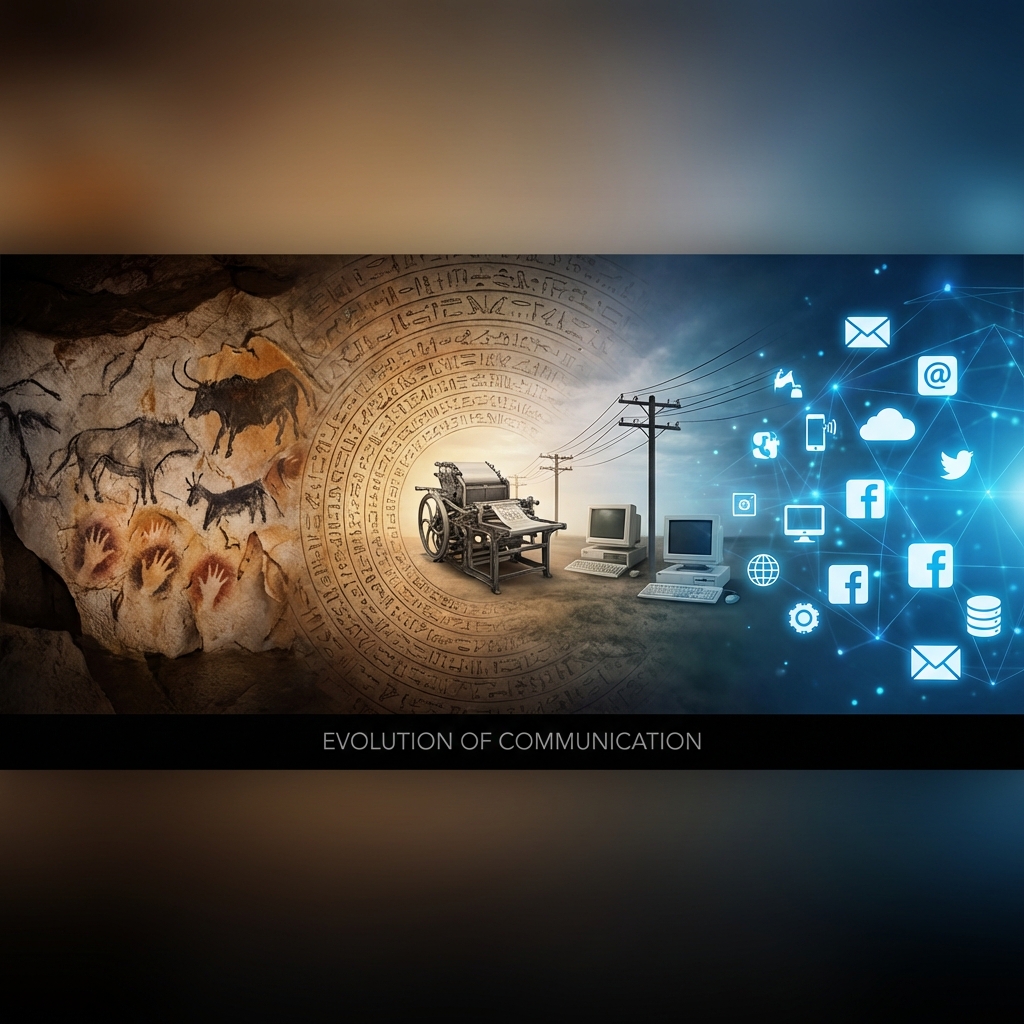
30,000 years ago, deep in the caves of Lascaux, our ancestors painted bison, horses, and hands on the stone walls. These images were not merely art for art's sake; they were information technology. A warning of the herd's path, a story of the hunt, a guide for survival. They were the original "icons"-direct, representational, and universally understood.
The Typographic Detour
As civilization advanced, so did the density of our information. Direct representation (drawing a cow to mean "cow") became inefficient for abstract concepts like "law" or "tomorrow." We invented alphabets-abstract code systems where arbitrary symbols represent sounds.
The Printing Press solidified this. For centuries, the Text was King. Visual language was relegated to mere illustration, subservient to the written word. Literacy became the gatekeeper of knowledge. If you couldn't decode the abstract symbols, you were locked out.
The Digital Return to Imagery
The Computer Revolution brought us full circle. The early Command Line Interface (CLI) was pure text-efficient but hostile. Then came the Graphical User Interface (GUI), and with it, the return of the Pictogram.
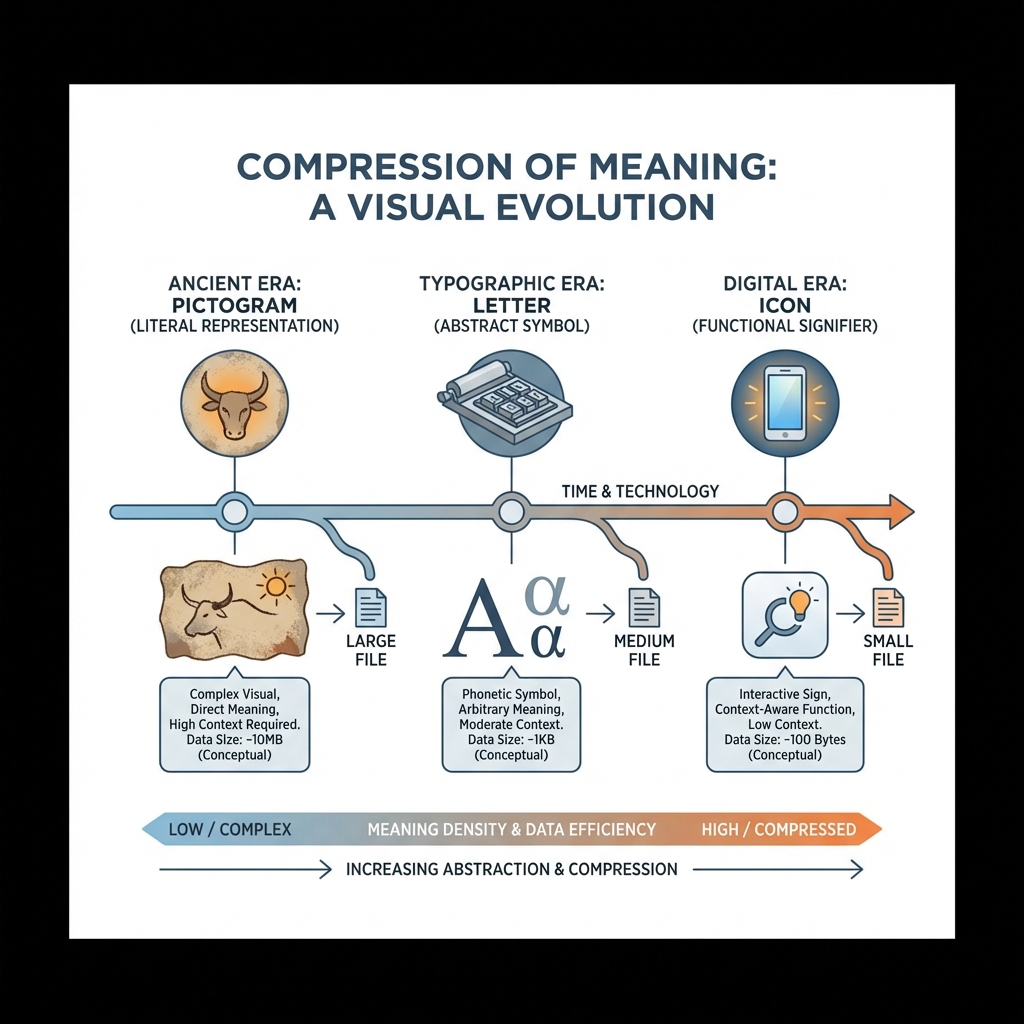
A computer screen was too small for paragraphs of instructions. We needed shortcuts. We needed the "Save" disk (a metaphor that survives even though floppy disks are extinct), the "Trash" can, and the "Folder." We returned to visual communication not out of nostalgia, but out of necessity. Complexity demanded compression.
The Emoji Revolution
We cannot talk about visual language without mentioning Emoji. In less than a decade, Emojis have become a global "pidgin language." A "Thumbs Up" 👍 or a "Heart" ❤️ conveys nuance and emotion that text struggles to capture efficiently. We are effectively re-learning to write in hieroglyphs, but this time they are digital.
The Vector Era
Today, we live in the Vector Era. Our visual language is no longer static paint on a wall or ink on a page. It is fluid, mathematical code (SVG). It must scale from the face of a smart watch to a stadium billboard without losing clarity.
This new visual language is dynamic. An icon changes state when you hover over it. It animates when clicked. It adapts its color to the user's system theme. We are building a living language that responds to its reader.
This is why Icora focuses entirely on SVG generation. We believe that we are writing the visual language of the future. Our tools-AI generation, vectorization, and refinement-are the pens and brushes of this new era.
Try Icora FreeFound this helpful? Share it!
Ready to Create Stunning Icons?
Put these principles into practice with Icora's AI-powered icon generator, professional studio tools, and developer-ready export.
Start Creating Free